

 Mark Freeman
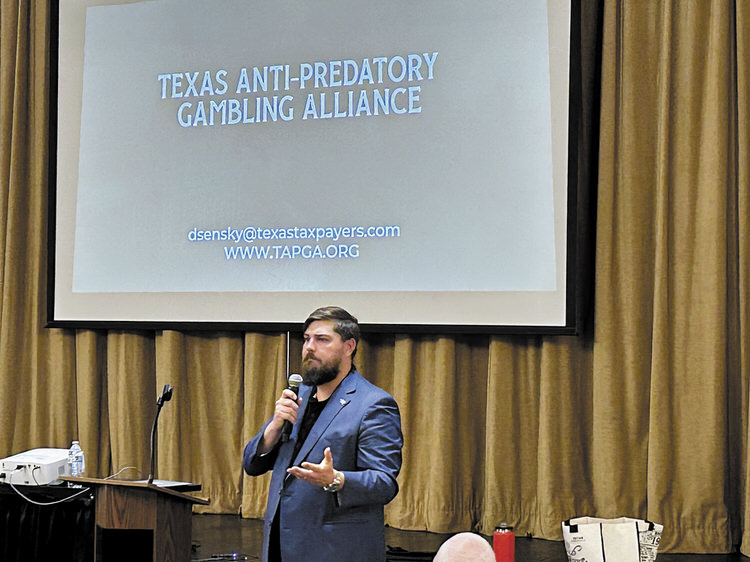
Our primary mission with the Robson Ranch Conservative Club is to inform and educate voters about the issues we and our elected officials are facing. One of those issues is Predatory Gambling, which was addressed in a July presentation by Destin Sensky, executive director of Texans for Fiscal Responsibility.
Predatory Gambling is a form of gambling where there is a profit motive for people or organizations to facilitate gambling and to encourage their customers to continue gambling. It is common for these groups to form alliances with governments to legalize their efforts. Examples of predatory gambling include state lotteries, regional casinos, sports gambling, internet casino gambling (like slots) and prediction markets (like Kalshi and Robinhood). However, fantasy football leagues and wagers among friends, bingo nights, or office Super Bowl wagers are not considered predatory.
Why should we be concerned about predatory gambling? Self-governing nations such as the USA must protect the public interest and the rights of citizens. However, some public officials see predatory gambling as a way to raise more revenue. Predatory gambling is designed to make people who are addicted to gambling, continue that effort. Young adults are the number one target as addiction hotlines list them as the largest clientele served. Through addiction, it perpetuates poverty and financial ruin. Psychologists have reported that numerous young people view gambling as the main way to gain wealth, instead of investing. After state approval of casinos in Pennsylvania, the number of addicted gamblers was double the number of “new jobs” created. The most lottery tickets are sold in the poorest sections of cities. The only legal predatory gambling in Texas is the state lottery, and it only funds three days of the state’s educational system in a year. As citizens, is this tradeoff between revenue and public interest really what we want to have established?
Who really benefits from predatory gambling? The examples of predatory gambling listed above are focused on directing customers to slot machines, and especially digital slots. It brings excitement with the bells and whistles along with the convenience of betting on your phone without leaving the house. Las Vegas casinos have stated in legal documents that slot machines are the money makers and provide more revenue than the rooms and food. Digital slots cannot be governed by state lines. The Texas State Lottery has already been rigged by a winner. Prediction markets are the fastest growing form of gambling and there are numerous reports of insider traders winning.
Predatory gambling is addictive and the resulting social costs to society far outweigh the revenue gained by governments. Revenue gained is too often routed to specific players in a rigged system. The future of our nation, young adults, are targeted along with the poor. We should encourage investing and not gambling.
For more information, visit the Texas Anti-Predatory Gambling alliance at tapga.org.